A couple of weeks ago there was a (behind a paywall) profile of me and Fine Margins by John Burns in the Irish Independent. Among the messages John took from our meeting was that bets on horses and golf were best avoided.
This triggered a reaction from people in the sports betting industry on LinkedIn. This isn’t so surprising. People who work for betting firms want their customers to keep betting on horses and golf, so the advice John passed on is something they would like to see discredited. Still, much of the commentary didn’t make sense if you looked closely at it. For example, bookmaker Anthony Kaminskas said people should listen to those who had “skin in the game”, perhaps forgetting that his skin in the game is that he wants people who bet with him to lose, since that’s how he stays in business.
But I also received messages from others who told me they enjoyed betting on horses and golf and thought there was value in it. So let me explain what I mean.
I have described previously how the way bettors disagree with each other allows bookmakers to set odds with a favorite-longshot bias. This is perhaps a bad term for this pattern because it suggests the pricing is related to whether something is a favorite or not. But the pattern really just relates to how likely a bet is to win. Bookmakers price bets with a high chance of winning get priced with a low profit margin and bets with a low chance of winning with a high profit margin.
And in contests with big fields, like many horse races and all golf tournaments, the sheer number of contestants means everyone is a longshot. Even the horse that is most likely to win the race doesn’t actually have that great chance of winning. That would be fine if the odds offset this low chance of winning but the evidence shows they don’t.
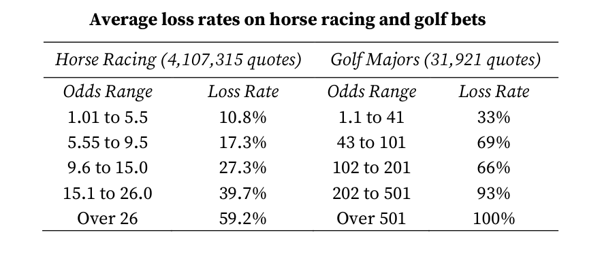
The historical evidence on how bets on horses and golf perform is absolutely brutal. The table below from my book shows the pattern of loss rates (percentage of money staked not returned) from two large datasets. As the odds worsen, average amounts of money lost increase. But even amongst the “favorites”, losses are severe.
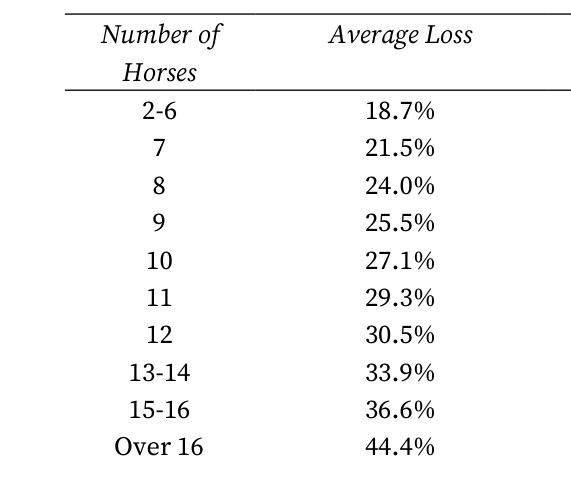
To see how field size influences loss rates, the table below shows how average loss rates when betting on horses worsen as the number of runners increases.
These are the facts. On average, people who bet on horses or bet on golfers to win tournaments get crushed.
Some people tell me that “longshots in golf and racing are where the value is.” In one objective sense, this is false. On average, longshot bets in golf and racing get crushed. But when people say this, they mean something different. They mean “yes the average punter gets creamed betting on horses or golf but I have a knack or special system that helps me win money doing this.”
When told this, my first reaction is usually that people should check their account statement to see if they are really winning with this strategy. If the bookmaker has kept your account open for years, chances are it’s because you have not been a consistent winner.
But if it’s true, well congratulations to you. You can see that the hurdle you have to beat when betting on these sports is significant, given how bad the average pricing is. Maybe you are sufficiently expert at making picks that you can still manage a profit. However, an academic writing a research-based book needs to focus on how these bets perform for most people. “These bets don’t work for most people, but they will work for you with this special system” would be a very different book from the one I have written (and would raise questions about if the special system was so good, why would I be sharing it).
You will also hear that golf rewards detailed analysis. Famous American sports bettor Rufus Peabody regularly discusses how he makes profits betting on golf. But Rufus does not bet on golf the way most people bet on golf. His team bets mainly on bilaterals or group matchups (will Viktor Hovland shoot lower than Shane Lowry? Who will shoot the lowest in a Thursday three-ball?) which means they are avoiding big fields. And Rufus combines cutting-edge statistical analysis (Monte Carlo models that he admits can take eight hours to run) with near-genius-like intuition about the game with a shedload of hard work with his team getting bets down.
Perhaps you’ve got some kind of mini-Rufus quant process going on with golf. Again, if so, congratulations. But let’s not pretend this stuff shows golf markets are “easy to beat.”
There are plenty more examples in the book of how field size matters, including showing margins on outrights/futures like “who will win the Super Bowl?” start out awful in the early season and get gradually better. Not going to show them here, at least yet. If you’re interested, you know where to find them.